

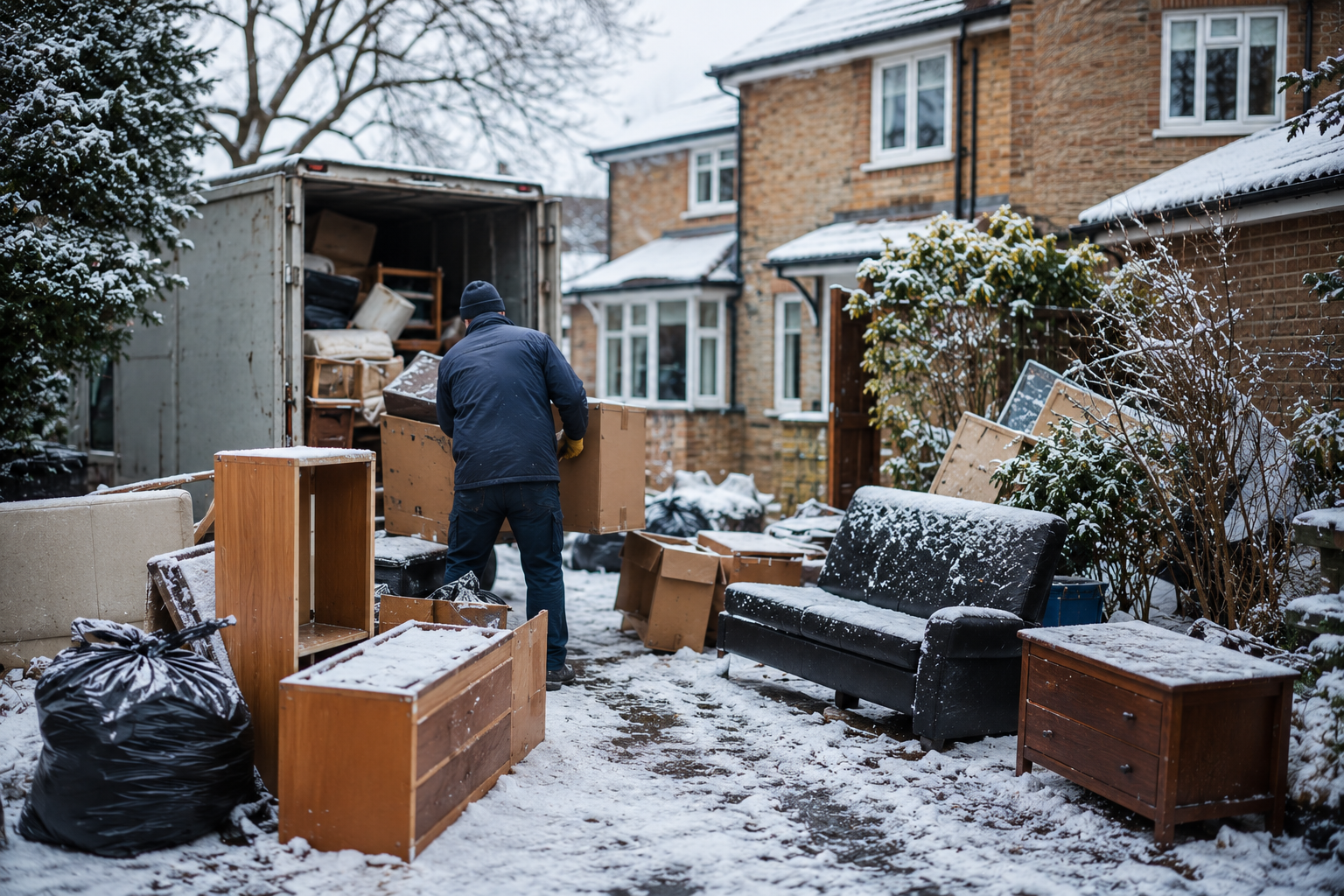
Property clearance is rarely convenient, but winter adds a layer of complexity that many people don’t think about until they’re already in the middle of it. Shorter days, wet weather, frozen ground, and the seasonal rush around Christmas and New Year all affect how a clearance runs — and how quickly a property can be left standing empty without problems building up inside it.
At iTrade House Clearance Norfolk, winter is one of our busiest periods, not because people are decluttering for the new year, but because so many clearances are triggered by events that don’t wait for good weather — a bereavement, a relative moving into care, a tenancy ending, or a landlord needing a property emptied and secured before it sits vacant over the coldest months. This guide covers what actually matters when a clearance needs to happen in winter, and how to avoid the mistakes that turn a straightforward job into a stressful one.
Why Winter Clearances Are Different From the Rest of the Year
A house clearance in June and a house clearance in January are not the same job, even if the property and the contents are identical. Daylight hours in Norfolk drop significantly by December, which shortens the practical working window for loading vans, especially with rural properties down long or unlit driveways. Wet weather turns gardens and access paths to mud quickly, which matters when clearing sheds, garages, or outbuildings. Icy conditions on rural roads around places like the Broads or the North Norfolk coast can delay access altogether. None of this is insurmountable, but it does mean winter clearances need more planning and less “we’ll fit it in whenever” flexibility than a summer job would.
Common Reasons Winter Clearances Get Booked
Most winter clearances fall into a few recurring categories. Probate clearances are common, since winter months often follow a bereavement and families are working against solicitor deadlines to empty a property before probate completes. Care home transitions also spike in winter, as families make decisions about elderly relatives ahead of the colder months when living alone becomes riskier. Landlords frequently request end-of-tenancy clearances before the new year to get a property re-let quickly, and storm or flood damage clearances increase after Norfolk’s autumn and winter weather events. Understanding which category a clearance falls into changes how it should be handled — a probate clearance, for example, requires far more care around sorting and preserving items of sentimental or financial value than a standard tenancy turnover.
The Real Risk of Leaving a Property Empty Over Winter
This is the part people underestimate. A vacant property left unattended through a Norfolk winter is exposed to a specific set of risks that don’t apply in warmer months. Unheated pipes can freeze and burst, often going unnoticed for days or weeks and causing serious water damage. Damp and condensation build up quickly in an unheated, unventilated house, leading to mould that spreads into walls, carpets, and furniture — problems that are far cheaper to prevent than to remedy. Many buildings insurance policies also include vacant property clauses that reduce or void cover after a set number of consecutive unoccupied days, particularly through the colder months when the risk of burst pipes rises. This is one of the strongest arguments for clearing a property promptly rather than leaving it “for now” — every week it sits empty and unheated is a week those risks compound.
Learn More: Bulky Waste Removal vs Council Collection in Norfolk
How Weather Affects the Clearance Process Itself
Beyond the property, weather shapes how a clearance team can actually work. Frozen or swollen locks and doors are a genuine issue on older Norfolk properties in cold snaps. Wet ground can make garden clearance and access to outbuildings slower and messier, particularly on rural sites without hard standing. Reduced daylight means clearance teams need to plan loading and disposal runs more tightly, since tips and recycling centres also operate reduced winter hours. A clearance company that hasn’t accounted for these factors in scheduling will run late, and a late clearance in December often means a delay of weeks rather than days, given how quickly booking slots fill up before Christmas.
Preparing a Property for Winter Clearance
A small amount of preparation makes a significant difference to how smoothly a winter clearance goes. Isolating the water supply and draining pipes if the property will remain unoccupied afterward prevents freeze damage once the heating is switched off. Taking final meter readings before the clearance protects against disputed utility bills later. Confirming key holders and access arrangements in advance matters more in winter, when a missed access window can mean losing the daylight needed to complete the job. Setting aside anything of sentimental, financial, or legal value — documents, jewellery, photographs — before a clearance team arrives is always worth doing, but especially so with probate properties, where items can otherwise get bagged up with general contents in the rush to beat the weather or a deadline.
Garden and Outbuilding Clearance Before Winter Sets In
Gardens, sheds, and greenhouses are often the last thing people think about, yet they carry their own winter-specific risks. Petrol and diesel left in mowers or strimmers needs to be disposed of correctly rather than left to degrade over winter in a shed. Garden furniture and structures left in place through wet weather deteriorate quickly and become harder — and more expensive — to remove once waterlogged. Greenhouses and sheds with glass or fragile roofing are more hazardous to clear once frost and ice are involved. Getting outdoor clearance done before the worst of the winter weather arrives is almost always cheaper and safer than leaving it until conditions have already turned.
Choosing a Clearance Company for Winter Work
Not every clearance provider is set up to handle the realities of a Norfolk winter, and this is where the difference between a man-with-a-van operation and a properly established clearance company becomes obvious. A reliable winter clearance partner should hold a valid waste carrier licence and provide waste transfer notes for full traceability, since fly-tipped waste traced back to a property owner remains their legal responsibility even after a third party has removed it. They should carry appropriate insurance for working on vacant or hazardous properties, understand how to sort and prioritise items in probate or sensitive situations, and have the flexibility to work around short daylight hours and restricted recycling centre schedules without simply pushing the job back. Price matters, but choosing purely on the lowest quote in winter is often where problems start — rushed, uninsured clearances are far more likely to leave damage, missed items, or compliance issues behind them.
Learn More: Rubbish Removal in Norfolk: What Can and Cannot Be Taken?
Responsible Disposal During the Winter Period
Recycling centres across Norfolk typically reduce their hours or close entirely around Christmas and New Year, which puts pressure on clearance schedules at exactly the time demand is highest. A clearance company with established routes for reuse, donation, and WEEE-compliant electrical recycling is far less dependent on tip access than one that relies solely on dropping everything at a household recycling centre. This matters both for timeliness and for keeping usable furniture, clothing, and electricals out of landfill during a period when charities often see increased demand for donated goods.
