

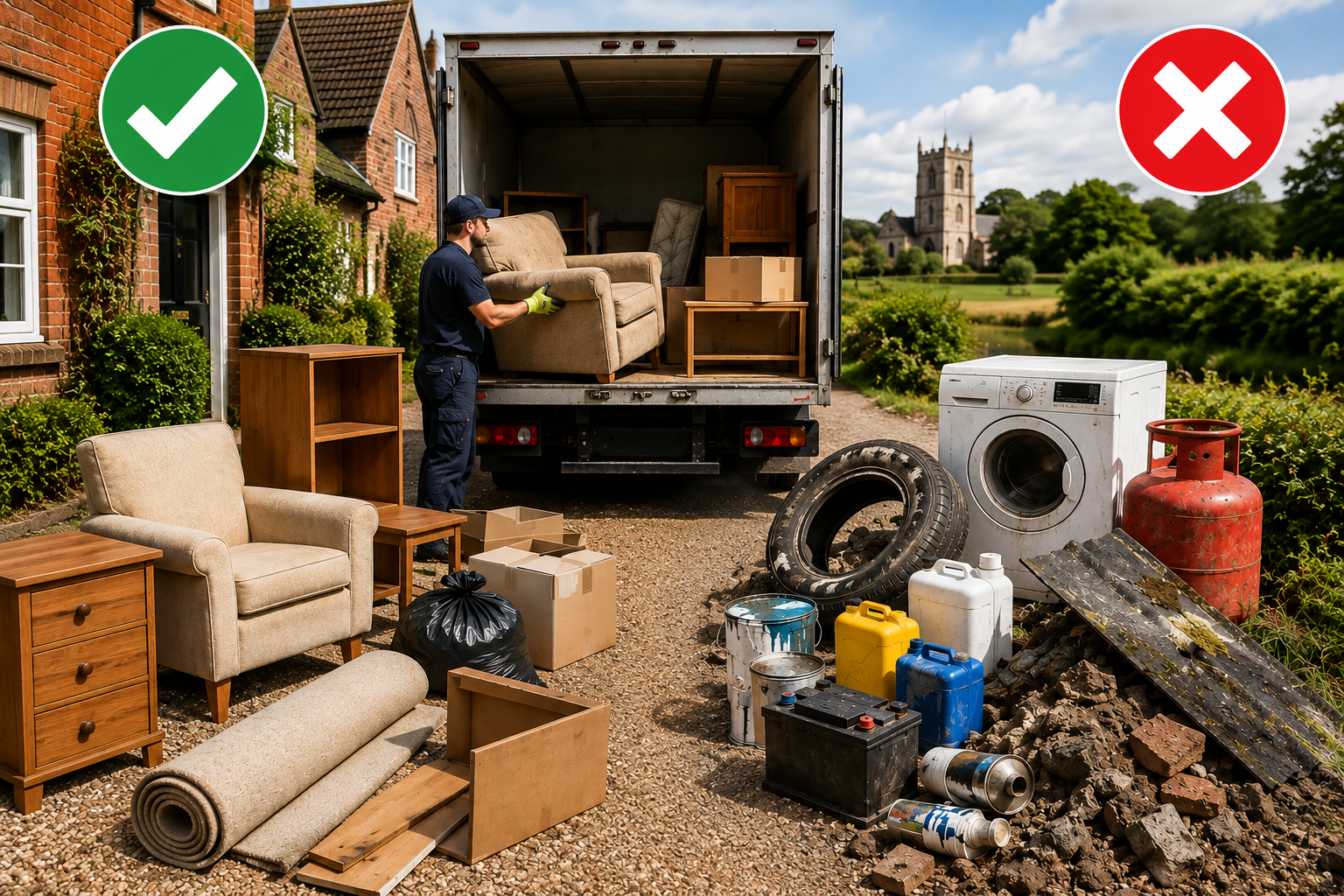
If you’ve ever stood in a garage full of old paint tins, a broken fridge, and half a shed roof wondering what on earth you’re allowed to put out for collection, you’re not alone. Rubbish removal sounds simple until you actually start sorting through a house, garden, or outbuilding — and then you realise that “just take it all away” isn’t really how it works, legally or practically.
Norfolk throws its own twist into the mix too. Between the market towns, the coastal holiday lets, and the older rural properties tucked down narrow lanes, clearance jobs here often turn up things a standard skip company won’t touch. Knowing what can and can’t be taken before the van turns up saves everyone time, and keeps you on the right side of the law.
Why It Isn’t as Simple as “Just Take It Away”
Under the Environmental Protection Act 1990, anyone who removes waste from your property has a legal duty of care to make sure it’s transported and disposed of properly. That’s why a genuine clearance company will be a registered waste carrier with the Environment Agency, and why we’ll always give you a transfer note or receipt for what’s collected. It’s also why fly-tipping carries serious penalties — councils across Norfolk, including Breckland, North Norfolk, and Great Yarmouth, actively pursue prosecutions and fines for illegal dumping, and the liability doesn’t always stop with the person who dumped it. If waste can be traced back to your address, you can be held responsible for how it was disposed of, even if someone else physically took it away.
So when a clearance firm tells you something “can’t just go in the van,” it’s rarely being difficult. It’s usually because that item has its own legal disposal route.
What We Can Take Away
Household and Domestic Clutter
General household rubbish, old belongings, unwanted furniture, broken toys, boxes of paperwork, kitchenware — the everyday stuff that builds up over years, or that needs clearing out fast after a house sale or bereavement, is exactly what house clearance is built for.
Furniture and Bulky Items
Sofas, beds, wardrobes, dining sets, and similar bulky furniture can all be removed. One thing worth knowing: upholstered furniture needs a valid fire safety label to be reused or donated under the Furniture and Furnishings (Fire) (Safety) Regulations. If a sofa doesn’t have one, it can still be taken away, but it’ll go for recycling or disposal rather than resale or donation.
Garden and Outdoor Waste
Old garden furniture, fencing panels, broken sheds, and general green waste in reasonable volumes are all collectable. Norfolk gardens tend to accumulate more of this than most — between allotments, static caravans with garden add-ons, and coastal properties with wind-battered fencing that needs replacing more often than you’d think.
Electrical Items
TVs, computers, kettles, microwaves, and other electricals fall under the WEEE Directive (Waste Electrical and Electronic Equipment). They can absolutely be taken, but they’re kept separate from general waste and routed through proper WEEE recycling rather than landfill, since they contain materials that need to be recovered or safely processed.
Small-Scale DIY and Building Waste
Offcuts of wood, old skirting boards, general non-hazardous material from a small home project can usually be included in a clearance. Larger building or renovation waste is a different conversation, and usually needs its own skip or licensed disposal route depending on volume.
Learn More: How Much Does House Clearance Cost in Norfolk?
What Can’t Simply Be Thrown in With the Rest
Asbestos
This is the big one, especially in Norfolk’s older housing stock, farm buildings, and garages. Asbestos cement roofing sheets, old garage roofs, and certain textured coatings and floor tiles from properties built or renovated before the early 2000s can contain asbestos. Under the Control of Asbestos Regulations 2012, this material has to be identified, handled, and removed by a licensed specialist — it cannot go in a standard clearance load. If we spot something that looks like it could be asbestos, we’ll flag it rather than risk it, and point you toward a licensed surveyor or removal contractor.
Fridges, Freezers, and Air Conditioning Units
These contain refrigerant gases covered by F-Gas regulations. The gas has to be safely removed by a certified technician before the unit can go on for scrap or recycling, which is why fridges and freezers are handled as a distinct category rather than bundled in with general electricals.
Gas Bottles and Pressurised Containers
Calor gas bottles, old fire extinguishers, aerosols in bulk — anything pressurised is an explosion or leak risk if handled incorrectly. These typically need to go back through supplier take-back schemes or specialist hazardous waste handlers, not a general rubbish load.
Paints, Chemicals, and Other Liquids
Old tins of paint, weed killer, engine oil, and similar chemicals fall under the Hazardous Waste Regulations 2005. They need to be taken to a licensed hazardous waste facility rather than tipped or binned, since they can contaminate soil and water if disposed of incorrectly.
Plasterboard
This one surprises people. Plasterboard is gypsum-based, and when it breaks down in landfill alongside other biodegradable waste, it can produce hydrogen sulfide gas. Because of this, plasterboard has to be separated and disposed of through its own waste stream rather than mixed in with general rubbish, particularly in any quantity.
Tyres
Tyres are recycled through a dedicated stream and aren’t accepted as part of general household waste collection, so they’re kept separate on any clearance.
Clinical or Medical Waste
Sharps, medication, and other clinical waste need specialist collection and can’t be included in a standard house clearance under any circumstances.
Norfolk-Specific Things Worth Knowing
A few things come up more often in Norfolk than elsewhere. Coastal towns like Cromer, Wells, and Sheringham have a high number of holiday lets and second homes, which means clearances there often involve years of accumulated furniture and appliances from multiple tenancies, sometimes with limited access down narrow lanes or through shared parking areas — worth mentioning when you book, so we can plan the right vehicle.
Norfolk County Council’s own Household Waste Recycling Centres also operate a permit scheme for vans and trailers, and they have their own limits on certain materials like plasterboard and asbestos. If you’re considering taking items to a recycling centre yourself rather than booking a clearance, it’s worth checking current permit and quantity rules before you load the van, since they do change.
Learn More: Managing an Inherited Property in Norfolk
How We Handle It
As a registered waste carrier, we sort everything as it comes out of the property — items in good condition go toward reuse or donation where possible, recyclable material is separated out, and anything hazardous is either handled correctly or flagged for a specialist referral rather than loaded onto the van regardless. You’ll get a proper record of what’s been taken and how it’s been dealt with, which matters if you’re a landlord, executor of an estate, or just want peace of mind that nothing’s ended up somewhere it shouldn’t.
Before We Arrive
If you’re not sure whether something falls into a grey area — an old boiler, a garage full of unidentified tins, roofing material of uncertain age — mention it when you book rather than on the day. A quick photo or description beforehand means we can tell you straight away what’s included in the clearance and what needs a different route, so there are no surprises when the van turns up.
Get in touch with iTrade House Clearance Norfolk for a straightforward quote, and we’ll talk you through exactly what can go and what can’t before we set a date.
