

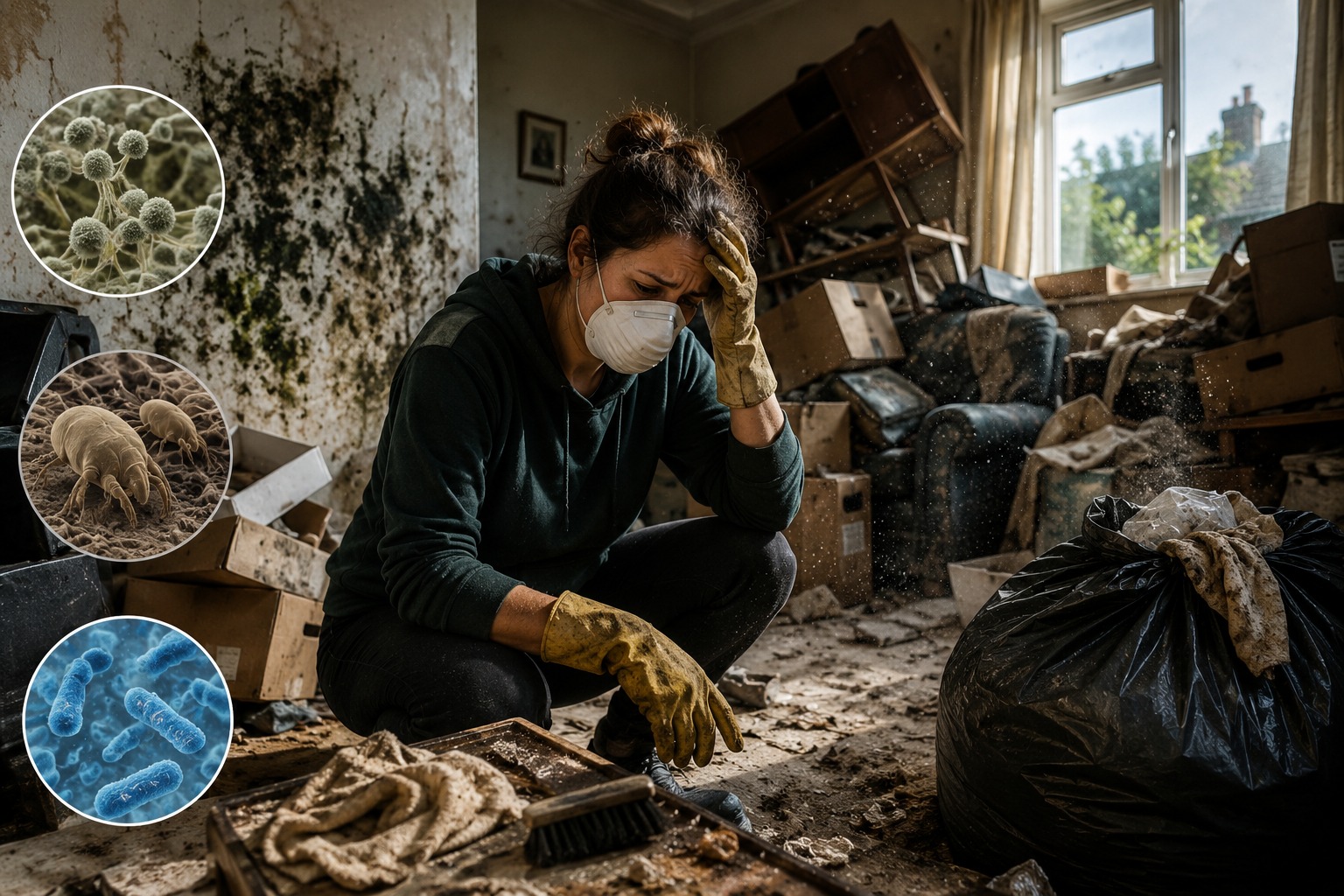
Clearing a house sounds like a weekend job — hire a van, put on some gloves, and get stuck in. But behind that simple plan sits a property that may have been undisturbed for years, sometimes decades. Furniture hides mould. Cupboards hide pests. Old insulation and floor tiles can hide asbestos. What looks like a straightforward decluttering task can quietly turn into a genuine health hazard, and most people only discover this once they’re already knee-deep in the job.
At iTrade House Clearance Norfolk, we’re called in more often than people expect to finish jobs that started as DIY projects — usually because someone got sick, injured, or simply overwhelmed by what they found. This article breaks down exactly what those risks are, why they’re easy to miss, and what to do instead.
Why DIY House Clearance Feels Deceptively Simple
On paper, house clearance looks like manual labour: lift things, sort things, dispose of things. What that framing misses is condition. A property that’s been lived in for forty years, left empty after a bereavement, or neglected during a hoarding situation isn’t just cluttered — it’s often biologically and chemically compromised. The risks aren’t visible from the doorway, which is exactly why so many DIY clearances go wrong partway through rather than at the start.
The Hidden Health Hazards Lurking in Cluttered Properties
Airborne Contaminants and Respiratory Risks
Disturbing years of undisturbed dust, fabric, and stored paperwork releases fine particulates into the air. For anyone with asthma, COPD, or general respiratory sensitivity, this can trigger serious breathing difficulty. Older properties often contain dust that has settled around fireplaces, old carpets, or loft insulation, and stirring this up without a proper mask can cause coughing, irritation, and in some cases, more lasting respiratory irritation after prolonged exposure.
Mould, Damp, and Fungal Exposure
Damp corners, water-damaged furniture, and long-closed rooms are ideal breeding grounds for mould spores. Black mould in particular is linked to headaches, sinus problems, and respiratory inflammation, and it thrives precisely in the kind of neglected spaces — behind wardrobes, under carpets, inside damp boxes — that DIY clearers handle directly with bare hands.
Pest Infestations and Biohazards
Long-cluttered homes frequently attract rodents and insects. Beyond the immediate unpleasantness, rodent droppings can carry bacteria linked to illnesses such as leptospirosis and salmonella, while accumulated waste in extreme clearance cases (including hoarding-related jobs) can present genuine biohazard conditions requiring specialist handling, not a bin bag and good intentions.
Sharp Objects, Broken Glass, and Physical Injuries
Old electronics, broken crockery, rusted tools, and damaged furniture edges are a near-constant presence in cluttered homes. Cuts and puncture wounds are among the most common injuries reported during amateur clearance work, and rusted metal in particular raises the risk of tetanus if a wound isn’t treated properly.
Musculoskeletal Strain from Heavy Lifting
Wardrobes, sofas, and old appliances are heavy, awkwardly shaped, and often need to be carried down stairs or through narrow doorways. Without proper lifting technique or equipment, back injuries and muscle strains are extremely common — and they tend to happen not on the first lift, but hours into the job, when fatigue sets in and form starts to slip.
Learn More: Landfill vs Recycling: What’s the Difference?
Chemical Exposure Risks During DIY Cleaning
Mixing Cleaning Products
In the rush to get a property clean quickly, it’s common for people to combine cleaning products without realising the danger. Mixing bleach with ammonia-based cleaners, for example, produces toxic chloramine gas, which can cause serious respiratory distress in an enclosed space. Most people don’t set out to mix chemicals — it happens when several products are used back-to-back in the same bucket or on the same surface without proper ventilation.
Asbestos in Older Norfolk Properties
This is one of the most serious and most overlooked risks in DIY clearance. Many Norfolk properties built before the year 2000 contain asbestos in floor tiles, textured ceiling coatings, old boiler insulation, or garage roofing. Undisturbed, these materials are generally safe. Broken, drilled, or forcibly removed — as often happens during an amateur clearance — asbestos fibres become airborne and can be inhaled, with health consequences that may not appear for years. This is a risk that genuinely warrants professional assessment rather than guesswork.
The Psychological and Emotional Toll of Clearance Work
Health risk isn’t only physical. House clearances frequently follow a bereavement, a family breakdown, or years of accumulated hoarding, and the emotional weight of sorting through someone’s belongings — deciding what to keep, sell, or discard — can be genuinely exhausting. Combine that emotional strain with the physical demands of the job, and it’s easy to see why so many DIY clearances stall halfway through, leaving a property half-cleared and a family more drained than when they started.
Why Professional House Clearance Reduces These Risks
A professional clearance team doesn’t just move furniture — they manage risk. That means recognising signs of mould or possible asbestos before they’re disturbed, using correct protective equipment as standard, following safe lifting and manual handling practices, and disposing of biohazard or chemical waste in line with proper regulations rather than a standard household bin run. It also means the emotional load of the job is shared, with the property handled respectfully and efficiently rather than becoming a prolonged, draining task for family members.
At iTrade House Clearance Norfolk, every clearance is approached with this in mind: identifying hazards before they become injuries, and handling the process so that families and homeowners aren’t the ones absorbing the physical and health risk.
When to Call in the Professionals
Not every clearance needs a professional team — a light declutter of a well-maintained home is usually manageable safely. But it’s worth calling in specialist help when a property has been empty for a long period, shows visible signs of damp or mould, is suspected to contain asbestos materials (common in pre-2000 Norfolk homes), involves hoarding-level clutter, or simply feels too large or too physically demanding to manage safely alone. In these situations, the cost of professional clearance is almost always lower than the cost of a health setback.
Learn More: How to Dispose of Old Appliances Legally and Responsibly
A Safer Way to Clear Your Property
House clearance isn’t just about volume of stuff — it’s about what that stuff might be hiding. If you’re facing a clearance in Norfolk and you’re unsure what condition the property is really in, it’s worth getting a professional opinion before you start lifting boxes. iTrade House Clearance Norfolk can assess the property, flag any hazards, and handle the clearance safely from start to finish — so the only thing you have to deal with is an empty, clean house.
