

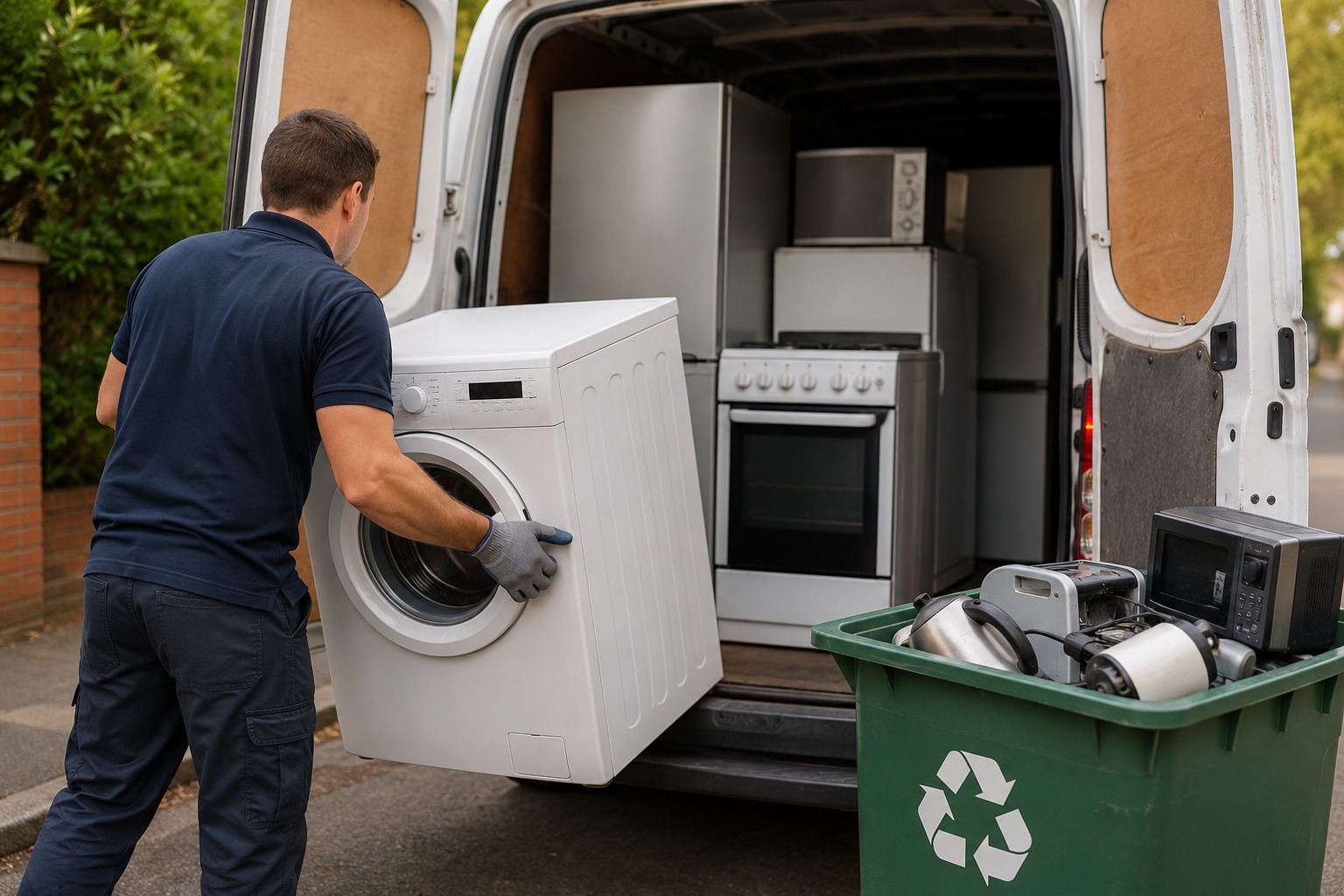
Old appliances have a habit of hanging around long after they have stopped earning their keep. A broken washing machine in the utility room. A tired fridge freezer in the garage. A microwave that still looks useful but gave up months ago. At first, they feel like small inconveniences. Then they become heavy, awkward, space-stealing reminders that they need to be dealt with properly.
The important thing is this: old appliances are not ordinary rubbish. Many contain metals, plastics, wiring, glass, batteries, refrigerants, oils, electronic components, and materials that must be handled through the correct waste route. Throwing them in a skip without checking, leaving them outside for “someone to take”, or handing them to an unlicensed collector can create legal, environmental, and financial problems.
For households, landlords, letting agents, probate clearances, and businesses across Norfolk, responsible appliance disposal is not just about getting rid of bulky items. It is about protecting your property, avoiding fly-tipping risks, recovering recyclable materials, and making sure every item goes where it should.
At iTrade House Clearance Norfolk, we understand that appliance disposal often forms part of a bigger clearance job. Whether you are clearing a kitchen, preparing a rental property, handling an end-of-tenancy clean-out, or managing a bereavement property, the right approach saves time and keeps everything above board.
Why Old Appliances Need Special Disposal
Most household appliances fall under WEEE, which stands for Waste Electrical and Electronic Equipment. In simple terms, if an item has a plug, battery, cable, charger, circuit board, or electrical component, it should not be treated like general household waste.
Common WEEE appliances include:
- Fridges and freezers
- Washing machines and tumble dryers
- Dishwashers
- Cookers, ovens, and hobs
- Microwaves
- Kettles, toasters, irons, and hairdryers
- Televisions and monitors
- Vacuum cleaners
- Electric heaters
- Computers, laptops, printers, and small electronics
These items often contain valuable recyclable materials such as copper, aluminium, steel, and circuit components. Some also contain substances that need careful handling. Fridges and freezers, for example, may contain refrigerant gases and insulation materials that require specialist treatment. Batteries can also create fire risks if they are crushed, damaged, or mixed with the wrong waste stream.
Responsible disposal helps reduce landfill, prevents pollution, and supports the recovery of reusable materials. In plain English: it is better for your home, better for Norfolk, and better for everyone who does not want old white goods dumped down a country lane.
Your Legal Duty When Getting Rid of Appliances
Many people assume that once waste leaves their property, it is no longer their problem. That is not quite how it works.
In England, householders and businesses have a responsibility to make sure their waste is passed to someone authorised to handle it. This is often called a duty of care. If your old appliance is later fly-tipped and traced back to you, you may be asked to show that you took reasonable steps to dispose of it correctly.
That means you should be cautious about using “man with a van” offers that seem suspiciously cheap, especially if they cannot explain where the waste will go. A responsible clearance provider should be able to tell you how items are separated, whether reusable goods are prioritised, and whether waste is taken to suitable licensed facilities.
Before handing over old appliances, ask:
- Is the collector registered to carry waste?
- Where will the appliance be taken?
- Will recyclable and reusable items be separated?
- Can they provide a receipt, invoice, or waste transfer note where appropriate?
- Are fridges, freezers, batteries, and electricals handled through the correct waste stream?
A legitimate company will not be offended by these questions. In fact, they should welcome them. Cowboys tend to disappear when paperwork is mentioned.
The Best Legal Ways to Dispose of Old Appliances
There is no single route that suits every appliance. The best option depends on the item’s condition, size, safety, and whether you can transport it yourself.
1. Reuse Appliances That Still Work
If an appliance is clean, safe, and in good working order, reuse should come before recycling. A working fridge, cooker, washing machine, or microwave may still be useful to someone else, provided it meets safety expectations and is suitable for resale or donation.
Possible reuse routes include:
- Local charities
- Reuse shops
- Community furniture projects
- Online local marketplaces
- Landlord-to-landlord reuse, where appropriate
- House clearance resale channels
However, electrical safety matters. Do not donate or sell an appliance that is unsafe, damaged, overheating, sparking, missing parts, or showing signs of electrical fault. Reuse is only responsible when the item is genuinely fit for use.
At iTrade House Clearance Norfolk, we always favour practical reuse where it makes sense. A clearance should not automatically mean everything goes to waste. Older items often still have value, and a careful sort can prevent useful appliances from being needlessly recycled or scrapped.
2. Use a Norfolk Recycling Centre
For many residents, Norfolk recycling centres are a suitable route for unwanted electrical appliances. These sites usually separate different categories of waste, including small electricals, large appliances, metals, screens, and other recyclable materials.
This option can work well if:
- You can safely lift and transport the appliance
- The item is accepted at your chosen site
- You have checked whether booking is required
- The appliance is from a household rather than commercial waste
- You are not transporting waste as part of a paid clearance service
Always check the rules for your nearest recycling centre before loading the car or van. Not every site accepts every appliance, and some categories may have specific restrictions. Large electrical items such as fridges, freezers, washing machines, tumble dryers, dishwashers, cookers, televisions, and microwaves may need to go to particular sites or designated areas.
3. Arrange Council Bulky Waste Collection
Many local councils offer bulky waste collection services for large household items, including some electrical appliances. This can be useful if you cannot transport heavy items yourself.
Council collection is often best for:
- Single bulky appliances
- Households without van access
- Elderly or vulnerable residents
- Simple one-property collections
- Items that are already disconnected and ready to remove
The downside is that council collections may involve waiting times, item limits, and rules around where appliances must be placed. Some appliances may need to be left outside by a certain time, which is not always ideal for flats, rural properties, shared access, or homes with limited frontage.
For larger clearances, a professional house clearance service is often more efficient because appliances can be removed alongside furniture, general household contents, garage items, loft items, and garden waste.
4. Use Retailer Take-Back When Buying New
If you are replacing an old appliance, ask the retailer whether they offer a take-back or collection service. Many retailers provide appliance recycling when delivering a replacement item.
This can be convenient for:
- Replacing a washing machine
- Upgrading a fridge freezer
- Buying a new cooker or dishwasher
- Removing an appliance at the same time as delivery
Retailer take-back works best when the old appliance is disconnected, accessible, and ready to go. It is less useful when you have several appliances, mixed household contents, or a property that needs a full clearance.
5. Hire a Registered House Clearance Company
For heavy, awkward, or multiple appliances, a professional clearance company can be the most practical option. This is especially true where appliance removal is part of a larger job.
A house clearance team can help with:
- Probate property clearances
- End-of-tenancy clearances
- Landlord and letting agent clearances
- Garage, loft, and outbuilding clearances
- Kitchen appliance removal
- White goods disposal
- Mixed furniture and electrical waste
- Rural property clearances across Norfolk
The key is to choose a provider that works legally and responsibly. A good clearance company should separate reusable items, recyclable materials, WEEE, scrap metal, and general waste wherever possible. They should also understand that appliances are not all the same. A fridge freezer is not handled like a toaster, and a battery-powered device is not treated like a wooden chair.
Learn More: How to Clear a Hoarder House Safely and Efficiently
Appliances That Need Extra Care
Some appliances require more attention than others because of their size, components, or environmental risks.
Fridges and Freezers
Fridges and freezers must be handled carefully because they can contain refrigerants, compressor oils, and insulation foam. They should not be broken up casually, stripped by unqualified people, or dumped. They need to go through a proper treatment route.
Before collection, empty the appliance completely, defrost it if needed, remove loose food waste, and keep the doors safely closed or secured. If the appliance has been stored outside, mention this when arranging collection because water damage or contamination can affect handling.
Washing Machines and Dishwashers
Washing machines and dishwashers are heavy and often contain residual water. Before removal, disconnect them safely, drain hoses where possible, and make sure access is clear. Never drag them across flooring without protection unless you fancy turning appliance disposal into a flooring claim.
Cookers, Ovens, and Hobs
Electric cookers and ovens should be disconnected safely before removal. Gas appliances should only be disconnected by someone competent and legally qualified where gas work is involved. Do not guess with gas. That is one area where “it’ll probably be fine” is not a strategy.
Small Electricals
Small electrical items are easy to overlook. Chargers, kettles, lamps, radios, electric toothbrushes, cables, and remote controls should still be recycled properly. Many small appliances contain metals and components that can be recovered.
Batteries and Rechargeable Items
Lithium-ion batteries are common in modern devices and can cause fires if damaged or disposed of incorrectly. Remove batteries where safe to do so and use proper battery recycling points. Do not put loose batteries into general waste or mixed clearance bags.
What Not to Do With Old Appliances
Responsible disposal is partly about knowing what to avoid. A few shortcuts can create long-term problems.
Do not:
- Dump appliances outside your property
- Leave white goods on public land
- Put electrical items in general waste bins
- Give appliances to unregistered collectors without checks
- Break up fridges or freezers yourself
- Mix batteries with ordinary rubbish
- Burn cables, plastics, or appliance parts
- Assume scrap value means legal disposal
- Use suspiciously cheap clearance services with no paperwork
Fly-tipping remains a serious issue across rural and urban areas. Norfolk’s lanes, lay-bys, field entrances, and quiet roads should not become dumping grounds for unwanted appliances. The cost of proper disposal is always better than the cost of dealing with enforcement, clean-up, or reputational damage.
How iTrade House Clearance Norfolk Helps
At iTrade House Clearance Norfolk, appliance disposal is handled as part of a wider, practical clearance process. We help customers remove unwanted items from homes, flats, rental properties, garages, sheds, offices, and probate properties while keeping the process organised and responsible.
Our approach is simple:
First, we assess what needs to be removed. Then we separate items by likely reuse, recycling, specialist disposal, and general waste. Appliances are identified early because they may need a different disposal route from ordinary household contents. Where items can be reused, that is considered before recycling. Where appliances are broken, unsafe, or beyond use, they are directed toward appropriate recycling or disposal channels.
This matters because a good clearance is not just about making a property empty. It is about leaving it clear, safe, tidy, and properly dealt with.
Customers often call us when they are dealing with:
- A property sale
- A bereavement clearance
- A landlord clearance
- A tenant leaving appliances behind
- A house renovation
- Downsizing
- Hoarded or long-neglected items
- Multiple bulky appliances with no easy transport
In these situations, appliance disposal is rarely the only task. There may be furniture, carpets, mattresses, garden items, tools, paperwork, bric-a-brac, and general household contents to sort as well. Having one organised clearance team can make the job far less stressful.
Preparing Appliances for Collection
A little preparation can make appliance removal faster, safer, and cleaner.
Before collection:
- Empty fridges, freezers, ovens, and microwaves
- Defrost freezers where possible
- Disconnect appliances safely
- Drain washing machines and dishwashers if you can
- Remove personal data from smart appliances or computers
- Keep instruction manuals or accessories with reusable items
- Clear a route from the appliance to the exit
- Tell the clearance team about stairs, tight access, or parking limits
If you cannot move an appliance yourself, do not risk injury. Washing machines, cookers, and fridge freezers are heavier than they look, and tight Norfolk cottages were not designed with modern white goods in mind.
Learn More: Can House Clearance Companies Remove Hazardous Waste?
Legal and Responsible Disposal Protects Everyone
Disposing of old appliances properly is not complicated, but it does require the right route. Reuse working items where possible. Recycle electricals through recognised channels. Use retailer take-back when replacing appliances. Check local recycling centre rules. And when hiring help, choose a responsible clearance company that understands WEEE, bulky waste, and legal waste handling.
Old appliances should not become someone else’s problem. They should be removed carefully, transported lawfully, and processed responsibly.
If you are clearing a property in Norfolk and need old appliances removed as part of a wider house clearance, iTrade House Clearance Norfolk can help you handle the job properly from start to finish.
A clear property is good. A legally and responsibly cleared property is better.

